



Targeted engineering of acoustics, NVH and driving feel
NVH engineering as an integral part of vehicle design – across powertrain, controls, and structure
With electrification and software-defined vehicle architectures, noise and vibration phenomena arise from complex system interactions. Traditional, component-based development approaches fall short in this context. NVH issues often only become apparent at a late stage—when degrees of freedom are limited and corrections lead to compromises in comfort, sound quality, and overall performance.
That is why we treat NVH development as an integral part of vehicle design. From the concept phase onwards, we shape acoustic and vibrational behavior—based on a deep understanding of control algorithms and the targeted use of active and passive measures. This is how we develop vehicles with precisely tuned sound and driving feel.
Why proactive NVH is critical
- For development
Avoidance of late iterations and validation risks – enabling stable programs in terms of timing and cost. - For the product
Comfort, sound quality and performance are deliberately engineered and remain consistent across all use cases – instead of being compromised by late-stage fixes. - For decision-making
Clear NVH targets as a basis for architecture, component and control decisions – before incorrect assumptions become embedded.
ASG and ANC using existing electric motors
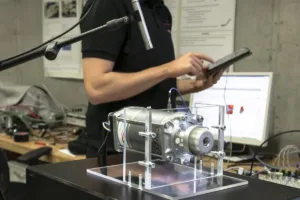
- Active sound generation (ASG) and active noise cancellation (ANC) without additional hardware
- Sound design using existing electric motors
- Low integration effort while strengthening brand sound identity
NVH in lines, hoses, and HV cables
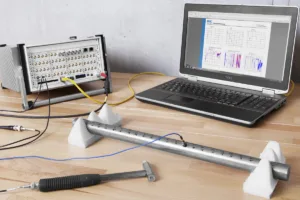
- Analysis of structure-borne noise and fluid transmission in lines, hoses, and high-voltage (HV) cables
- Identification of resonances, excitations, and critical design parameters
- Reliable decision-making based on validated simulation and clear engineering guidelines
NVH simulation and root cause analysis
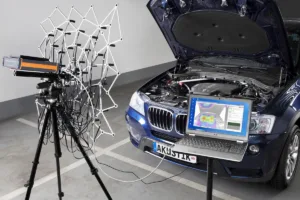
- Efficient NVH simulation through the combination of reduced-order models and finite element methods
- Fast variant studies to identify root causes and effective design levers
- Virtual optimization as a basis for informed concept and cost decisions
Elastic components and their NVH behavior

- Dynamic characterization and analysis of structure-borne noise transmission in elastic components
- Source–path–receiver analysis to identify critical transmission paths
- Targeted component tuning for improved isolation and long-term NVH stability
Active suspension systems and their NVH impact

- Analysis of NVH effects in actuators and control algorithms of active suspension systems
- Diagnosis of tonal noise and NVH effects under real driving conditions
- Optimization of isolation and control to reduce unwanted NVH effects
Sound and noise in the vehicle interior

- Analysis of interior noise and identification of relevant sound sources
- Optimization of acoustic measures for a balanced noise level
- Tuning of sound quality in line with brand-specific targets
With NVH as an integral part of vehicle design, we create vehicles with precisely tuned sound and driving feel.
Talk to us about your NVH engineering requirements.